
Once Upon: A Storyteller’s Memoir
Chapter Six: Iron Shoes, Conclusion

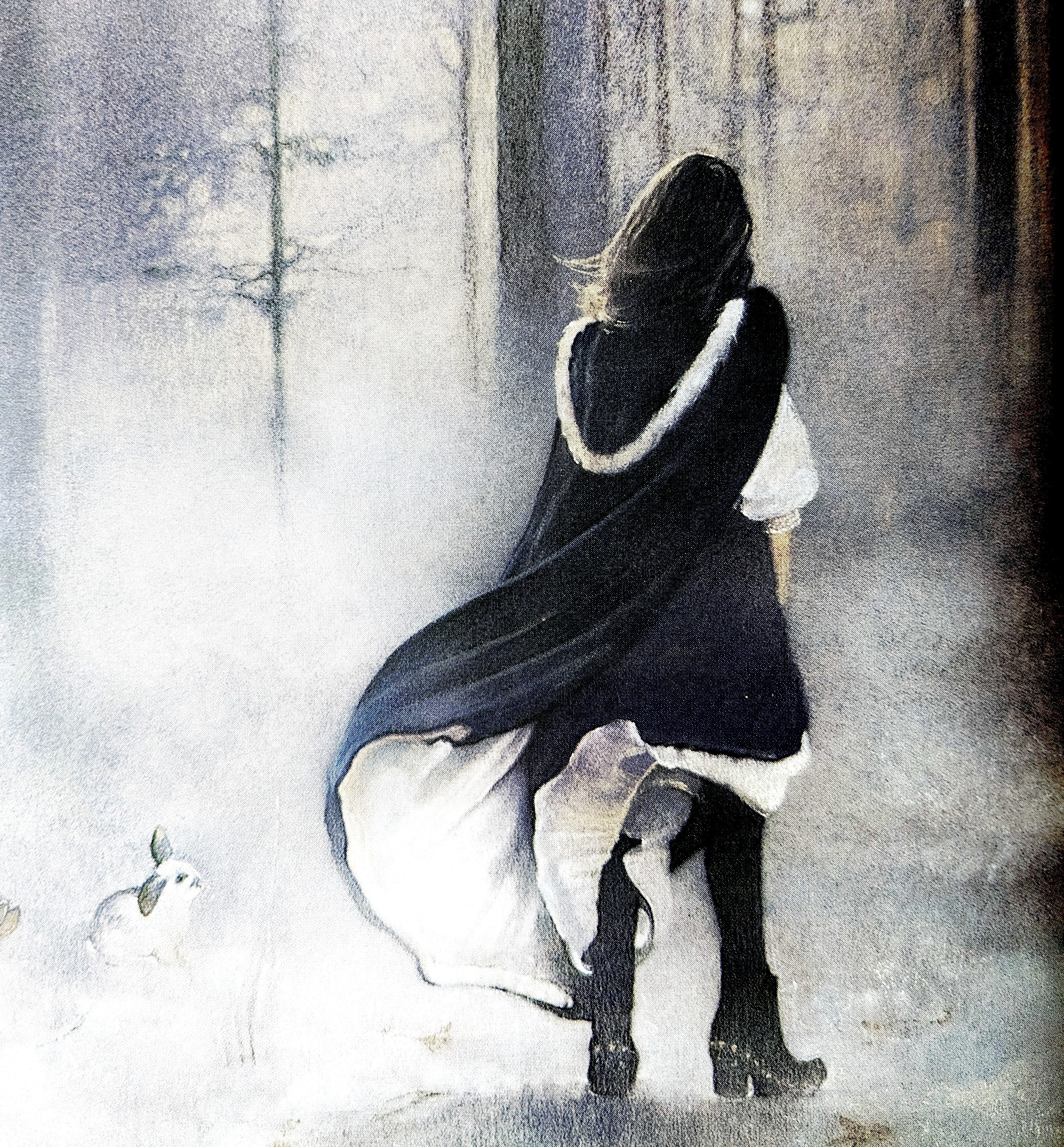
Hearing the birds chirping to their mates among the trees made her think with longing of her husband, and she wept bitterly and entered the wood. For three days and three nights she struggled through it, but could find nothing. She was quite worn out with weariness and hunger, and even her staff was no further help to her, for in her many wanderings it had become quite blunted.
~Andrew Lang, Red Fairy Book
On a Saturday afternoon, Momma lured Mike and me to see a movie matinee in another Southside neighborhood, but we got off the bus in an isolated, dismal spot, with no stores or theaters in sight. Momma paced up and down on the dirt path in front of a high, wrought iron fence that surrounded the grounds of an enormous building.
“Momma, why are we here? You said we were going to the movies.” I asked her again, but she wasn’t listening.
Muttering to herself, she repeated, “I can’t put him here. I can’t put him here.”
Mike and I had accompanied her on a long bus ride to the Southeast of town, to this miserable place, with the promise of a special treat. But her words now sent chills down my back as I peered through the black bars of the fence to a forbidding place, an old-fashioned, three-story, brick building with peaked towers, and a guard house near the fence. Who was she talking about?
Standing in the dust, I felt the weight of the moment and Momma’s anxiety, heightened by the blinding heat of the afternoon sun, as cars whizzed by the desolate outpost. A wooden sign mounted in the grass caught my eye and I realized that we were standing at the fence of the Texas State Mental Hospital. My mouth went dry with fear—there was only one person Momma would think of putting here, Daddy.
“Are we going to the movies? I’m thirsty.” I complained to cover my dread, to get away from that iron fence.
“Oh, yes...,” Momma paused to wipe away her tears, another worrisome sign. “There’s a theater just up the road.”
It was an odd choice of a movie for my brother and me, a romantic tear-jerker, September Affair, the story of a passionate, secret love affair that led the lovers to abandon their families and live abroad until they were found out. Momma wept through the entire film, to its inevitable, tearful farewell.
I felt drenched in a sorrow I did not understand, but the lingering melody of the “September Song” remained with me as the musical score for that day we spent on the outskirts of town.
“Why are you crying, Momma?” I asked.
“It’s about your father,” she said, “I thought he loved me, but he can’t. Something’s wrong with him. Tía is trying to tell me.”
“What’s wrong with him?” I asked, afraid of the worst.
“I can’t say. Come along, then,” Momma said, recovering herself. “We need to catch the bus and get back.”
That Mom dragged us to this bleak place on a searing hot day, without explanation, and to an adult movie that most likely didn’t pass the Catholic censures, was just another way she neglected our existence or our frightened needs to understand.
I always felt that we children had walk-on parts in the all-consuming melodrama of our conflicted parents, with no speaking lines.
Looking back, I can appreciate the pivotal importance of that day, that Mom was processing the secret of her own fraudulent marriage, a secret so terrible that she could not speak of it, so profound that she was left to grieve the end of her romantic dream alone.
Dad was in a bind. He faced problems at Lackland Air Force Base working long hours with the men in the intelligence unit, worsening struggles at home, and pressure from Tía, who insisted that Dad could no longer repeat his pattern of run, quit his job, and leave town with his young family. Facing his issues head on, he began counseling sessions in 1951, with encouragement from the Catholic community.
Dad was told in no uncertain terms that he must tell his wife the outrageous truth, that he was gay—that he’d known he was a homosexual as a teenager. Anguished, he admitted to Mom in confidence that he had sought shelter in their marriage and family life, to shield him from persecution as a criminal, a felon who could be incarcerated or institutionalized. But the cover of a family wasn’t enough, because he’d been drawn to relationships with men at the many jobs he’d quit to avoid scandal or worse.
Mom was given a choice, as years later she disclosed to me, when a counselor visited our parents, late one evening. We children were told to play out in the backyard and for no reason at all should we interrupt their meeting in the living room. The atmosphere became more surreal when Dad gave us a stern warning, closed both doors into the house, and locked them. Mike and I played catch with the softball but I kept missing, even with my baseball glove—too worried about the meeting inside.
We never knew what was said that day, except we did know that our family was in serious trouble. No one had ever come to visit our house except Tía. But I can imagine the grim conversation from Mom’s remarks to me—many decades after it took place:
“Ms. Fisher, it must be difficult to learn that your husband is a homosexual and has known that he’s had this tendency since his high school years.”
Mom said she was stunned, that she had no idea, but had often wondered why Dad was so restless and volatile, why he couldn’t keep a job. She believed he had severe mental problems.
“Some say,” said the counselor, “that homosexuality is a mental illness, but whatever it is, it is difficult to control. Your husband has continued to be attracted to men and they to him. Carl told me that he’s let you know how hard he’s fought against this, how much he’s feared being discovered on his jobs, being fired, or even arrested. Carl is willing to make a renewed commitment to family life, but he will need your trust, now that you know the truth.”
Mom could either keep Dad’s secret and continue their marriage, or reveal it and allow Dad to bear the legal consequences of his so-called “abhorrent” sexuality. To her credit, in spite of Dad’s duplicity, she made a vow to keep his secret hidden for all our sakes, certainly to maintain her own social status and pride. After deep and tearful reflection, she agreed to seal Dad’s secret in absolute silence, for twenty years as it turned out—until the 1970s, when many draconian laws were repealed, after we’d all gone our separate ways.
When the counselor left, Dad explained to Mom that threats against homosexuals were real—his fears that propelled him to leave town rather than risk discovery were valid. He told her that homosexual men were criminalized and risked prison or aversion therapy in a psychiatric hospital.
“It’s worse for me now in the military,” he said, “because of the ‘Lavender Scare’ that links homosexuality to communism. Any suspicious behavior on my part could blackball me. I’d be fired, at least.”
Mom listened and was glad that Tía had prepared her for this discussion, that she’d taken the trip to the Mental Hospital and saw that awful alternative with her own eyes. She knew and accepted that, as conflicted as our home environment was, it was a safe haven for Dad.
Soon, priests came to call at our Yellowstone Street house and spoke in kind, gentle tones to each one of us. In their counseling, what they and others advised Dad to do was to cultivate hobbies and engage with his children. Bolstered by the Catholic community, since both Mom and Dad joined the progressive Christian Family Movement, he continued to make the extraordinary effort: to embrace fatherhood, marriage, and the teachings of the church.
A vigorous man of many skills, he threw himself into family life and directed his creativity into a wide range of projects, from homing pigeons to Mahjong. It was a treacherous compromise. On the one hand, Mom was left in a dark depression, knowing she was never loved as a wife; on the other hand, Dad was left to change his basic nature through sheer determination.
One change I noticed: They had shared the same bed in our various childhood homes, but they bought twin beds, and pushed them together for appearances’ sake.
One evening after that fateful day, hidden within the branches of the overgrown pomegranate bush in the backyard, I turned to my favorite story in the library’s fairy tale book, “The Girl with the Iron Shoes,” and read more of her journey. I found solace in the strength of the maid who traveled along broken terrain with hope in her heart.
It was a grim, hard-edged time for my parents, coming to grips with their problems, even if I wasn’t told what they were. I felt the difference, a sober shift, a loss. My mother wept at odd times; Dad spent more time away from home, and was unusually quiet when he came back. But I imagined that if a princess could endure and wear out three pair of iron shoes on her adventure, so could I.
On and on she walked until her last pair of shoes fell in pieces. So she threw them away and went on with bare feet, not heeding the bogs or thorns that wounded her, or the stones that bruised her. At last she reached a beautiful green meadow on the edge of a wood, and walked in the soft cool grass.
Chapter Six, conclusion
Reflections
Were there scandalous secrets in your childhood family that you later discovered?
Were you aware of the risks to homosexuality before its discriminatory laws were repealed in the late 1970s—the fear of criminal prosecution or diagnosis of mental illness, at the very least of social stigma?
When a broken marriage is maintained for the sake of the children or for economic and societal pressure, what is the long term effect on the children?
Dear Kate, Still riveting. Edge of the seat writing/reading. I appreciate how you told this story . . . the events as they happened, without a hint of "poor me." You are a miracle . . . to be so grounded and loving, given your upbringing. You are such a creative spark!
You did a great job expressing it all.